

Cleaning Jewellery at Home in 2026: What Ultrasound, Steam and Household Products Really Do
Home jewellery cleaning has become more common in recent years because ultrasonic baths and compact steam cleaners are easier to buy than ever, and “quick hacks” with household liquids spread fast online. The problem is that jewellery is not one material: a diamond ring, a pearl necklace, an enamel pendant and a rhodium-plated chain react very differently to the same method. In 2026, the safest approach is still simple: identify the materials first, then choose the mildest method that actually fits the piece.
Ultrasonic cleaners: effective for some jewellery, risky for others
An ultrasonic cleaner removes dirt by creating microscopic bubbles in a liquid; the bubbles collapse and dislodge grime from tiny gaps. This can be genuinely useful for sturdy pieces such as diamond jewellery in solid gold or platinum, especially where soap film and hand cream build up behind stones or around prongs. When used carefully, it can restore shine in areas a cloth cannot reach.
The downside is that the same vibration can expose weak points. Older settings with worn prongs, micro-pavé, or pieces that have had repairs can be vulnerable: small stones may loosen, and fragile edges can chip. If a ring already catches on fabric, if a stone rattles when tapped lightly, or if you see uneven prongs, an ultrasonic cycle can turn “slightly loose” into “missing stone”.
If you do use an ultrasonic device at home, keep it conservative: lukewarm water with a tiny amount of mild washing-up liquid, short cycles (about 1–3 minutes), and a full rinse in clean water afterward. Avoid strong chemical concentrates, degreasers, bleach, and anything abrasive. Dry with a lint-free cloth and check the setting immediately after cleaning, especially around small accent stones.
Materials that should not go into an ultrasonic cleaner
Pearls should be treated as “wipe-only” jewellery. They are organic, layered, and often drilled; liquid can enter through drill holes and affect the stringing over time, while vibration can reduce lustre. For pearls, a slightly damp soft cloth, then a dry cloth, is the practical home routine, and it is worth avoiding sprays, perfumes and hair products directly on them.
Opals are also poor candidates for ultrasonic cleaning because they can be sensitive to both vibration and prolonged moisture exposure, depending on the type and any existing surface crazing. A gentle hand clean is safer: quick contact with mild soapy water, minimal rubbing, immediate rinsing, and careful drying. If an opal already shows fine surface lines, treat it as fragile and avoid any “deep-clean” methods.
Emeralds are a special case because many are routinely treated with oils or resins to improve apparent clarity. Ultrasonic cleaning can pull these fillers from fractures, changing the stone’s look and sometimes making fissures more visible. For emerald jewellery, stick to brief, gentle cleaning and keep heat, prolonged soaking, and aggressive chemicals out of the routine.
Steam cleaning: fast results, but heat and pressure are not neutral
Steam cleaning is popular because it can lift grease and film without detergents. For robust stones like diamonds, rubies and sapphires in solid settings, controlled steam can help remove residue that dulls brilliance, particularly on rings worn daily. It is also useful for plain metal chains and bands where you want to avoid chemical solutions altogether.
However, steam is not just “water”: it combines heat and pressure. Rapid heating can stress brittle or internally fractured stones, and pressure can force moisture into crevices where residue later dries into a film. Pieces with glued elements, composite stones, or delicate inlays are at higher risk, because heat can weaken adhesives and cause parts to shift.
If you choose steam at home, avoid extremes: keep the piece at a safe distance, use short bursts, and let jewellery cool naturally rather than dunking it into cold water. Never steam-clean a mixed-material piece “just to be safe”; mixed materials are exactly where problems start. When in doubt, use hand cleaning and reserve steam for simple, sturdy designs.
Rhodium plating, enamel and mixed finishes: what to watch for
Rhodium plating on white gold is a thin surface layer designed to improve colour and shine, but it wears over time on high-contact areas such as ring shanks and prongs. Steam itself is not a “chemical stripper”, yet repeated aggressive cleaning can make wear more noticeable by removing surface films and exposing already-thin areas. If you see warmer yellow tones showing through, that is usually a sign of normal plating wear, not dirt.
Enamel is essentially fused glass applied to metal, and it can chip at edges if the piece is old, cracked, or frequently knocked. Rapid temperature changes are a known stress factor for brittle finishes, so steam introduces a risk if the enamel already has hairline flaws. A gentle cloth clean is safer than any method involving heat, and scrubbing enamel edges with a brush is best avoided.
Jewellery that mixes finishes—polished metal with brushed sections, or metal combined with resin, lacquer, or decorative coatings—benefits from the mildest routine possible. In practice, that means mild soapy water, a very soft brush used only on metal areas, thorough rinsing, and careful drying. If a finish looks “patchy” after cleaning, stop and avoid repeating stronger methods; a jeweller can identify whether it is residue, wear, or a coating issue.
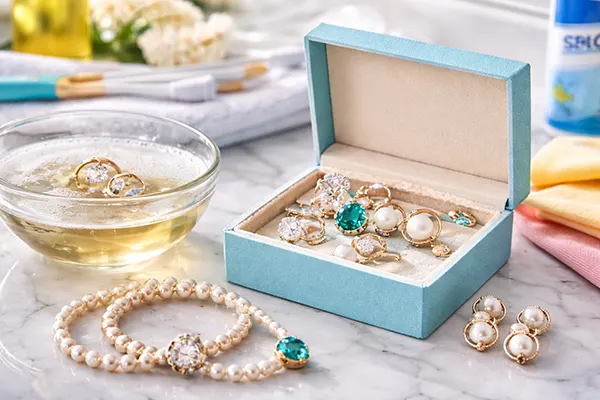
Household products: what is safe, what is risky, and what to do instead
The most damaging mistakes usually come from household cleaners designed for bathrooms and kitchens. Chlorine-based products, bleach, descalers, oven sprays, and strong alkaline cleaners can attack alloys, dull polished surfaces, and weaken solder joints even if the jewellery looks fine right after rinsing. This matters for clasps, chain links and prongs, where a small loss of strength can lead to breakage later.
Ammonia and alcohol are often recommended online as “quick fixes”, but they are not universal. Some pieces tolerate brief contact better than others, yet residues can irritate skin and can leave films in tight settings if not rinsed fully. More importantly, these substances should be kept away from organic gems like pearls, from opals, and from stones that are commonly treated or filled, because the risk of dulling or changing appearance is not theoretical.
A realistic, safe home routine in 2026 is still basic and effective: lukewarm water, a small amount of mild washing-up liquid, a soft toothbrush used gently, then a full rinse and careful drying. If grime does not lift without pressure, do not escalate to harsher chemicals; treat it as a signal that the piece needs professional cleaning or inspection. That approach protects both appearance and the mechanical integrity of the setting.
Practical checks before and after cleaning, plus a simple storage habit
Before any cleaning, do a quick inspection in bright light: look for bent prongs, gaps around stones, and areas where a setting looks uneven. If you have a ring with small stones, run a soft cloth over it; if it catches, a prong may be raised. These checks take seconds and can prevent losing a stone during cleaning.
After cleaning, rinse thoroughly and dry completely, especially around settings. Residue from even mild soap can dull shine if it dries in tight areas, and moisture trapped under stones can make jewellery look cloudy. A lint-free cloth works well; avoid paper towels, which can scratch softer metals and leave fibres around prongs.
Storage is part of cleaning because it prevents the build-up that triggers “deep cleaning” attempts. Keep pieces separated to reduce scratching, avoid storing jewellery in humid areas like bathrooms, and let pearl pieces rest flat rather than hanging them for long periods. A simple, consistent routine usually keeps jewellery looking better than aggressive cleaning done occasionally.