
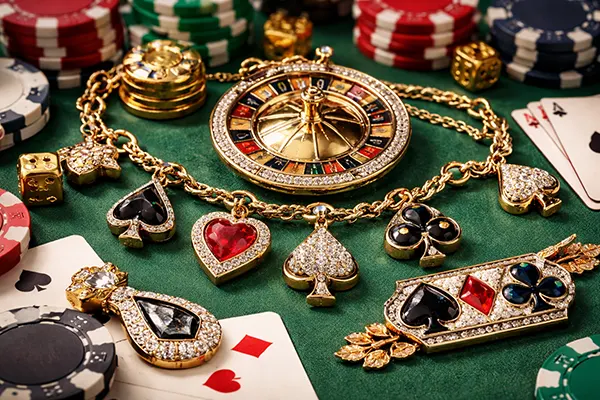
Antique card-motif jewellery: how spades, hearts and roulette shaped design
Playing-card symbols have travelled a long way from ink on paper to precious metal and gemstones. In antique jewellery they work as instantly readable signs: a heart can signal affection, a spade can hint at status or daring, and a roulette wheel turns chance into something you can wear. This article focuses on how designers and workshops translated that visual language into pendants, bracelets and vintage brooches, and how collectors can assess authenticity and condition in 2026.
How card symbols became a jeweller’s shorthand
The familiar suit signs were designed to be simple, bold and easy to repeat—qualities that also suit jewellery. A clean silhouette can be cut as a charm, outlined in enamel, or set with stones without losing its meaning at arm’s length. That clarity is why suit motifs show up across eras, from small sentimental pieces to confident statement designs.
In Europe, the four-suit system most people recognise today was standardised in France in the late 15th century. The shapes were practical for mass production with stencils, and their visual “grammar” spread widely through printed decks, shop signs and decorative arts. Once the symbols became common cultural shorthand, jewellers could borrow them without needing long explanations.
Designers also liked the built-in duality: red versus black, luck versus risk, romance versus strategy. That tension translates well to materials—think red stones against black enamel, or diamond pavé next to dark onyx. Even when a piece is playful, the motif can still feel surprisingly graphic and modern.
Victorian and Edwardian roots: charms, lockets and small-scale wit
Many early card-themed jewels were made as personal tokens rather than overt “casino” statements. Victorian workshops produced novelty pendants and brooches that referenced popular pastimes, including card games, and the motifs often appeared as miniature elements: a single heart charm, a spade cut-out, or a tiny enamelled diamond shape.
Materials were chosen for contrast and durability. Gold provided warmth and status, while enamel delivered crisp colour blocks that echoed the printed look of playing cards. In better examples, the enamel edges are sharp and well-contained, with no muddy bleed into the metal—a small detail that still helps collectors separate careful work from later imitations.
By the Edwardian period, lighter settings and refined lines made suit motifs feel less like novelty and more like elegant graphic design. A suit symbol might be integrated into a bar brooch, a delicate pendant drop, or a bracelet link, keeping the reference subtle while still legible.
Design tricks that make suits look expensive, not costume
The strongest antique and vintage pieces treat card symbols as design elements first, and “theme” second. A spade can become a stylised spearhead with a long taper; a club can read as a trefoil echoing floral jewellery; a diamond can be framed like a miniature plaque. When the motif is well-proportioned, the result feels intentional rather than gimmicky.
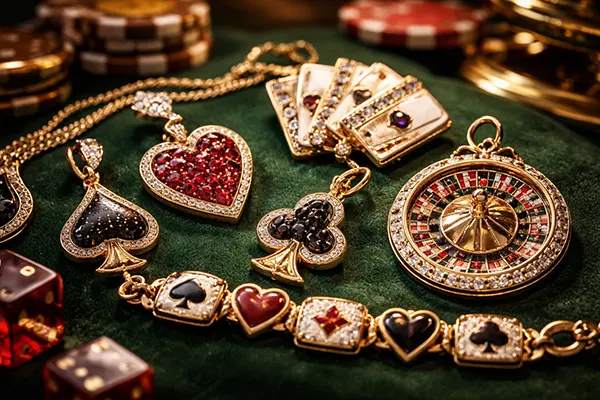
Colour is a major differentiator. Red-and-black enamel is the obvious route, but many high-quality vintage items use stones instead: rubies, garnets or red spinels for warmth; onyx or black enamel for depth; and diamonds for crisp highlights. The goal is contrast that stays clean in low light, which is one reason monochrome combinations remained popular in mid-20th-century accessories too.
Men’s jewellery played a role in keeping these motifs in circulation. Cufflinks, tie pins and signet-style rings often used suit symbols as a quiet personal signature—sometimes a single suit, sometimes a full set. These pieces can be excellent entry points for collectors because hallmarks and maker’s marks are often clearer on functional items.
Roulette motifs: when jewellery becomes mechanical
Roulette-inspired jewellery sits slightly apart from suit symbols because it often involves movement. Spinning pendants and novelty brooches turn the idea of chance into a physical action, which makes them memorable and, when well-made, surprisingly satisfying to handle. The best examples spin smoothly without wobble and still look balanced when worn.
Vintage roulette pieces appear in both fine and costume jewellery. In fine jewellery, you may see a gold wheel with coloured stone accents around the rim, reflecting the numbered pockets through colour rhythm rather than literal printing. The engineering is usually modest—simple rotation rather than complex gearing—but it must be sturdy enough to survive decades of wear.
When assessing a roulette piece in 2026, prioritise construction over theme. Check the hinge or central pin for play, look for uneven wear that suggests long-term rubbing, and inspect stone settings for looseness along the outer ring. A roulette motif is only charming if it still functions and sits flat; otherwise it becomes a repair project with unpredictable cost.
Collecting in 2026: authenticity, condition and sensible buying
Card-motif jewellery is heavily copied, so basic authentication matters. Start with what you can verify: hallmarks, metal stamps, and consistent construction. A legitimate antique piece should show wear that matches its age—softened edges in high-contact areas, gentle surface marks, and patina appropriate to the metal—without looking artificially distressed.
Condition is often the price-maker. Enamel is especially telling: hairline cracks, chips at the edges, and small losses are common, but large re-enamelling jobs can change the character of a piece and reduce collector appeal. Stones bring their own checks—abrasion on facets, replaced stones that don’t match colour or cut, and prongs that have been heavily re-tipped.
Provenance helps, but it is not magic. Auction-house descriptions, jeweller documentation and repair records can add confidence, yet you should still evaluate the object in front of you. For higher-value purchases, a specialist report or an independent jeweller’s assessment is usually cheaper than a mistaken buy.
How to wear and care for these pieces without damaging them
Antique jewellery can be worn regularly if you treat it as an object with limits. Avoid wearing enamel or spinning roulette pieces during activities that involve impact, vibration or water exposure. Mechanical motifs are particularly vulnerable to knocks that bend pins or loosen the central axis.
Cleaning should be conservative. A soft, dry cloth is often enough for routine care. If cleaning is needed, use methods appropriate to the materials: avoid ultrasonic cleaning for enamel, glued settings, or pieces with uncertain repairs; and be cautious with strong chemicals that can dull finishes or creep under enamel edges.
Storage matters more than many people think. Keep pieces separated so metal doesn’t scratch enamel or softer stones, and store roulette items so the wheel isn’t pressed sideways for long periods. If you collect multiple motifs, a simple habit—photographing hallmarks and condition on arrival—also helps you track changes over time and supports future insurance or resale documentation.